Science that changes the world

Mgr. Kateřina Černá, Ph.D.

Specialisation: Geomicrobiology, environmental microbiology
...

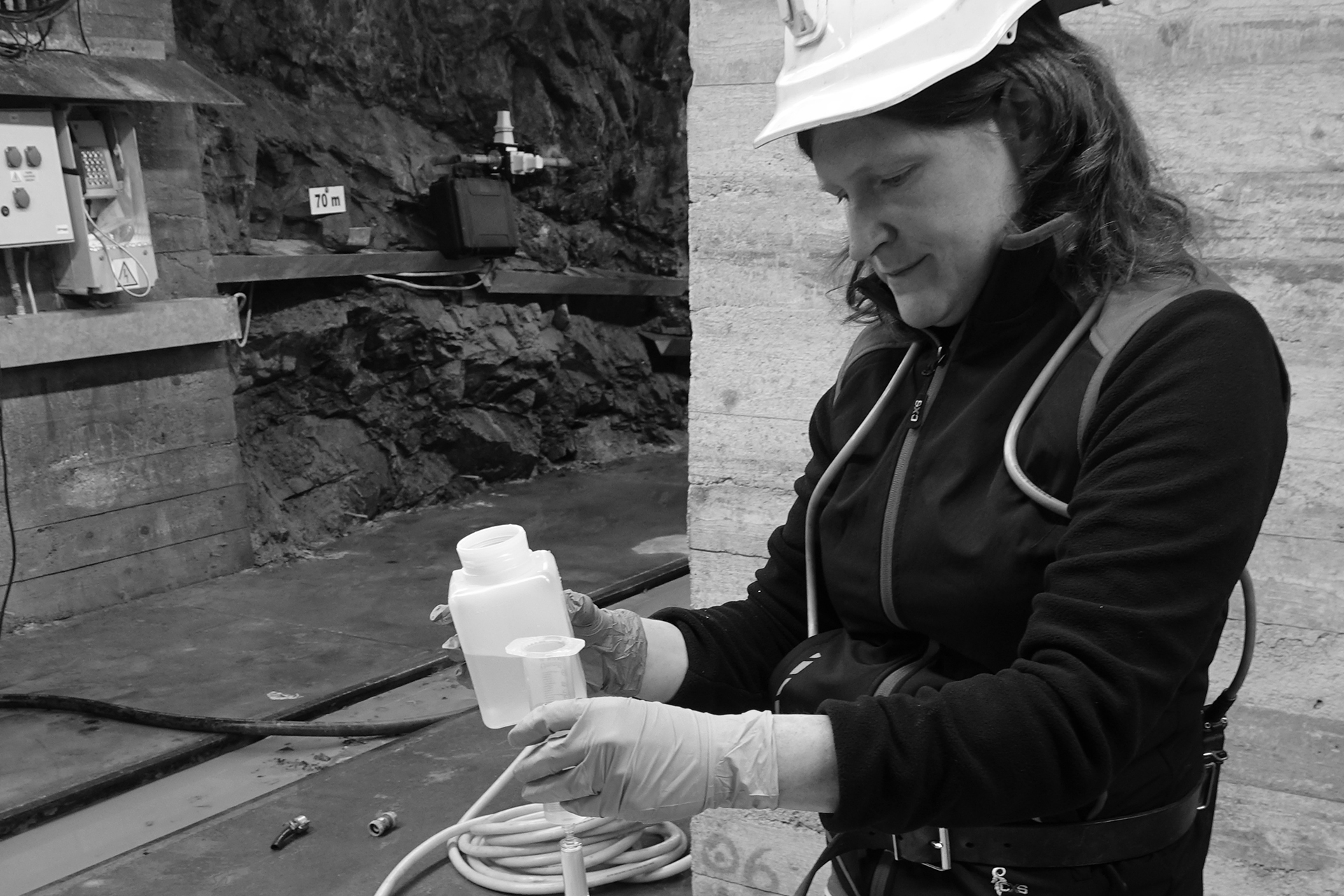
Kateřina researches geomicrobiological processes that affect the long-term safety of deep geological repositories for radioactive waste and underground storage of green hydrogen. She believes that these scientific findings contribute to the long-term reduction of CO₂ emissions on Earth.

From the world of bees to underground ecosystems: My journey to geomicrobiology


I came to geomicrobiology by chance. I originally studied entomology, focusing on ecology, ethology, molecular genetics, and sociobiology of solitary bees and their parasites—wasps. I have always been fascinated by how relationships between organisms and their environment, as well as between organisms themselves, work.

After maternity leave and moving to Liberec, I was offered the opportunity to change my field of study and immerse myself in a completely different world – geomicrobiology, which studies the relationships between microorganisms and the underground environment. Although I had never been interested in microbiology during my studies, I gradually discovered the fascinating world of bacteria. Their ability to survive in extreme conditions, adapt, and even change the environment in which they live completely captivated me. I realized how crucial a role microorganisms can play not only in natural ecosystems, but also in the technologies that shape our future. Their interaction with the surrounding environment is key to the safe storage of radioactive waste and hydrogen.

My work therefore focuses on understanding these processes so that we can ensure the long-term stability and sustainability of these solutions. A clear benefit of my work is to increase the safety of nuclear waste storage, as I see nuclear energy as an important pillar of the transition to zero-emission energy, at least in this crucial phase of transformation. At the same time, I am interested in ways to efficiently store energy from renewable sources. Solar and wind energy need solutions for storing intermittently produced energy, and hydrogen storage represents a very interesting possibility for achieving this. Microorganisms can also play an important role in this area, which is why I believe that geomicrobiology can contribute to a more sustainable future.

Key projects and achievements:

o 2019-2023: Limiting factors for the survival and spread of microbial communities that are important for corrosion barriers in deep geological repositories for radioactive waste. Technology Agency of the Czech Republic (TAČR THÉTA program, project number: TK02010169); lead researcher

o 2021-2024: European Joint Programme on Radioactive Waste Management (EURAD), Work Package Concord (Container corrosion under disposal conditions), project number: 847593, lead researcher and member of an international consortium.

o From 2023: The influence of microbial activity on the lifetime of containers for deep geological disposal of radioactive waste. Ministry of Education, Youth and Sports of the Czech Republic, INTER-EXCELLENCE program, project number: LUC23160; co-investigator

o From 2023: Microbial risks associated with underground hydrogen storage in Europe. Technology Agency of the Czech Republic (CETPartnersip, TAČR EPSILON program, project number: TH83020003), member of an international consortium – principal investigator for the Czech Republic.

Publications

Mijnendonckx, K., Smolders, C., Bartak, D., Le Duc, T., Morales-Hidalgo, M., Povedano-Priego, C., Jroundi, F., Merroun, M.L., Leys, N., Cerna, K., 2024. Comparing the effectiveness of different DNA extraction methods in MX-80 bentonite. Environmental Microbiology Reports 16, e70047. https://doi.org/10.1111/1758-2229.70047

Bartak, D., Šachlová, Š., Kašpar, V., Říha, J., Dobrev, D., Večerník, P., Hlaváčková, V., Matulová, M., Černá, K., 2024. Dramatic loss of microbial viability in bentonite exposed to heat and gamma radiation: implications for deep geological repository. World J Microbiol Biotechnol 40, 264. https://doi.org/10.1007/s11274-024-04069-w

Projects and innovations:

Microbial risks associated with underground hydrogen storage in Europe


Description: Storing hydrogen from renewable sources in underground/subsurface storage facilities is a suitable solution for medium- to long-term storage of this gas. However, underground storage facilities contain rich microbial communities that can use the stored hydrogen in their metabolism, causing losses of stored H2. They also pose a risk to operational safety and quality deterioration due to H2S formation. The HyLife project aims to reveal the extent of microbial activity in different types of sites across Europe (salt caverns, porous media including aquifers and natural gas storage facilities). The project objectives are: to standardize methodologies for direct use in a Europe-wide sampling campaign, to study and characterize microbial diversity and H2 consumption dynamics in real samples from sites, to explore strategies for limiting microbial activity and their impact on business decisions, and to summarize the knowledge gained in a comprehensive database of European storage sites.

Head of the project for TUL: Kateřina Černá

Source of funding: Technologická agentura ČR + EU